Estimated land used in the supply chain for textile products purchased by EU households per person in 2022.
Keep clothes moving.
Children's clothes often have more life in them than one child can use. A baby size may fit for only a few weeks. A jumper can be too small long before it is worn out.
Het Gele Laarsje keeps that useful life close to home: families bring in good clothes, other families choose what fits next, and repairs help favourites last longer.
The local clothing loop starts with what already exists.
When a good item is reused in Leeuwarden, it does not have to become a new purchase somewhere else. The event makes that choice practical: sorted sizes, checked quality, baby-size buying, repair, and a monthly rhythm families can return to.
A baby vest can be outgrown after only a handful of wears. Trousers can still be sturdy when the knees sit in the wrong place. That mismatch is exactly where swapping works: the clothes are not finished, the child has simply moved on.
Het Gele Laarsje began as a baby clothing loop and grew into a children's clothing swap. The practical idea stayed the same: keep good children's clothes useful for longer, make reuse reachable for different family budgets, and contribute in a small local way to a climate-neutral children's clothing chain.
The hidden footprint behind clothing.
Clothing has an impact before it reaches a wardrobe: land and water for fibres, raw materials, production energy, transport, dyeing and finishing, microplastics from synthetic fabrics, and waste after use.
Estimated blue water used in the textile supply chain per person in the EU in 2022.
Estimated primary raw materials used in the supply chain for EU household textile purchases per person in 2022.
Estimated greenhouse gas emissions from those textile purchases per person in 2022.
Why reuse helps.
Nobody has to make perfect clothing choices. The useful move is smaller and repeatable: choose what already exists, keep cotton in use, repair what can continue, and pay attention to synthetic fibres.
Choose second-hand before new.
Only 1% becomes new clothing, and more than 80% of global textile waste is incinerated or landfilled.
Keep cotton in use longer.
A single cotton T-shirt can require 2,700 litres of fresh water, and textile production is linked with about 20% water pollution.
Repair and wear longer.
The Dutch circular-textile route includes repair, reuse, and swaps.
Watch synthetics.
Synthetic fibres are a big part of today's clothing mix; one microplastics overview puts them at 70% synthetic fibres, and one polyester laundry load can release up to 700,000 microplastic fibres.
The circular textile future is already mapped out.
The Netherlands has a public circular-textile direction running toward a closed textile chain in 2050. The same government infographic says Dutch people buy an average of 20 pieces and 6 pairs each year, and that buying 3 fewer pieces per year could save 975 kiloton CO₂ in the Netherlands. Het Gele Laarsje is one small local habit inside that bigger shift: use less new, keep useful textiles moving, and repair where possible.
A green network close to home.
The local loop does not end with one monthly event. Leeuwarden has nearby places to check for preloved children's clothing, and there are brands families may look at when something does need to be bought new.
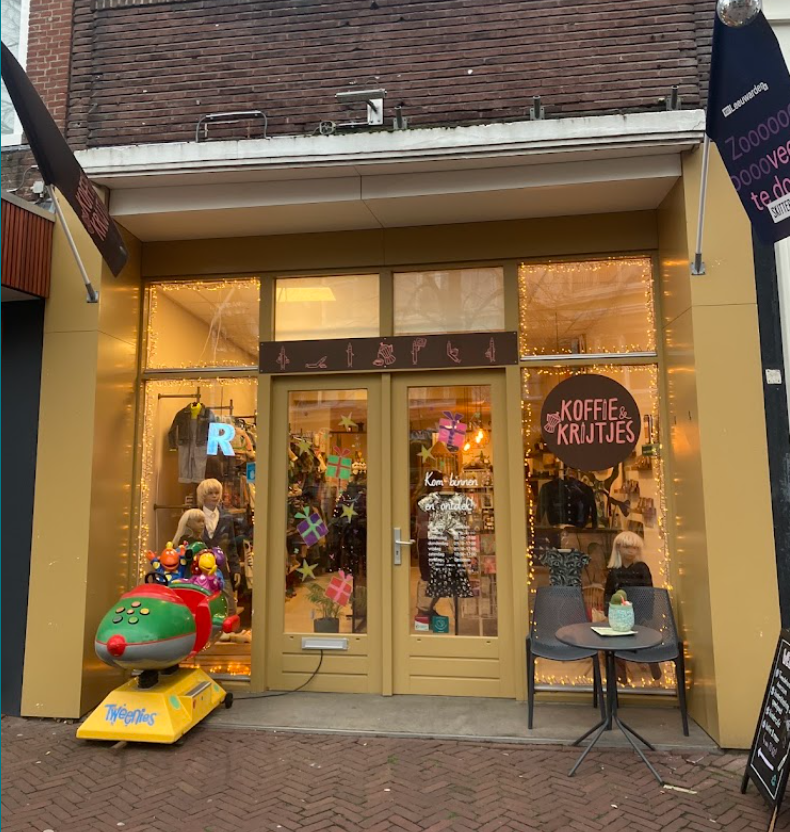 Koffie en Krijtjes
A Leeuwarden place to check when you are looking for preloved children's clothes nearby.
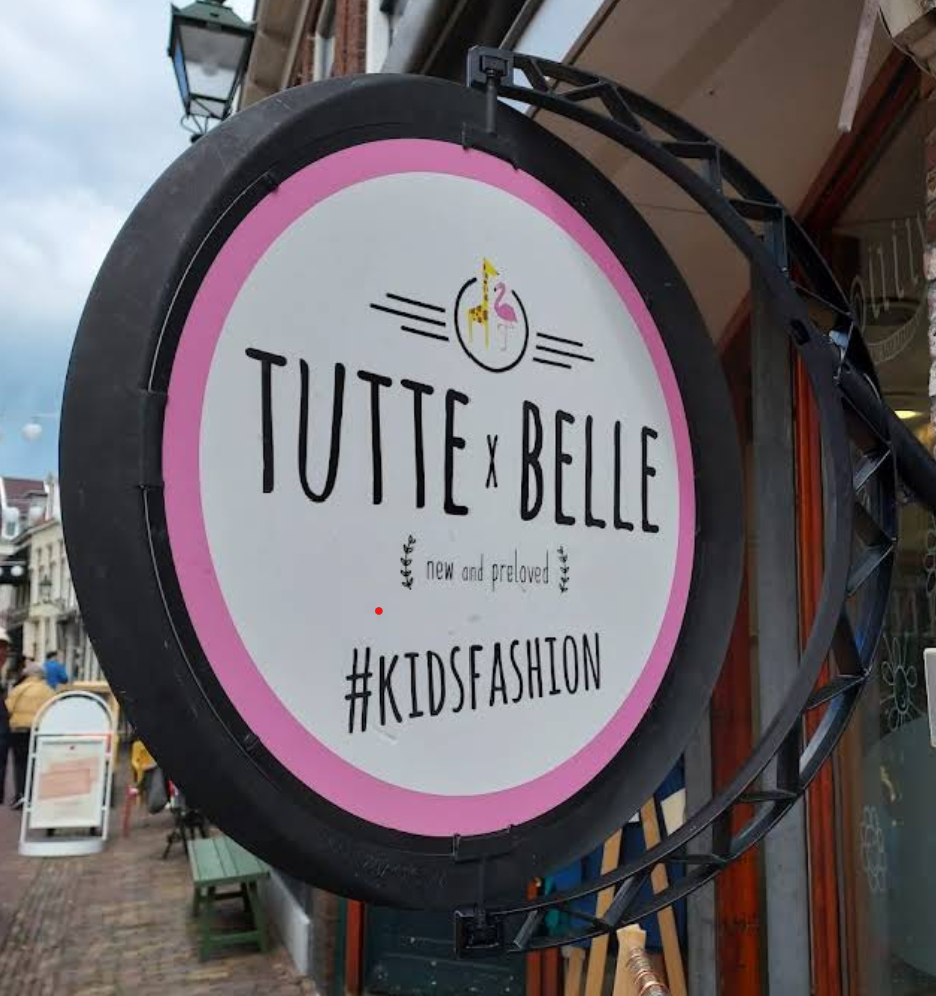 Tutte Belle
A local second-hand address with clothing drop-off information.

Het Gele Laarsje
The monthly swap option for children's clothes, baby-size buying, and signed-up repairs on the third Monday evening.
Plan your visit
Greener children's clothing examples
Mingo
Little One Clothing
Kioko Kids
Petit by Basics
HEMA baby clothing in organic cotton
Learn more about clothing and reuse.
These films, articles, and organisations give more context about textile waste, repair, second-hand clothing, and circular fashion.
Watching
- The True Cost
- RiverBlue
- Brandy Hellville & the Cult of Fast Fashion
- Pointer: De kledingafvalberg
- Tegenlicht: Uit de Kleren
- De Wereld van Dutch Design: Kleding
Reading and organisations
Ready to use the loop?
Come by on the third Monday, see how the event works, or check the rules before packing a swap bag.